
- High Country Conservation
- January 29, 2026
- Ask Eartha
Dear Eartha,
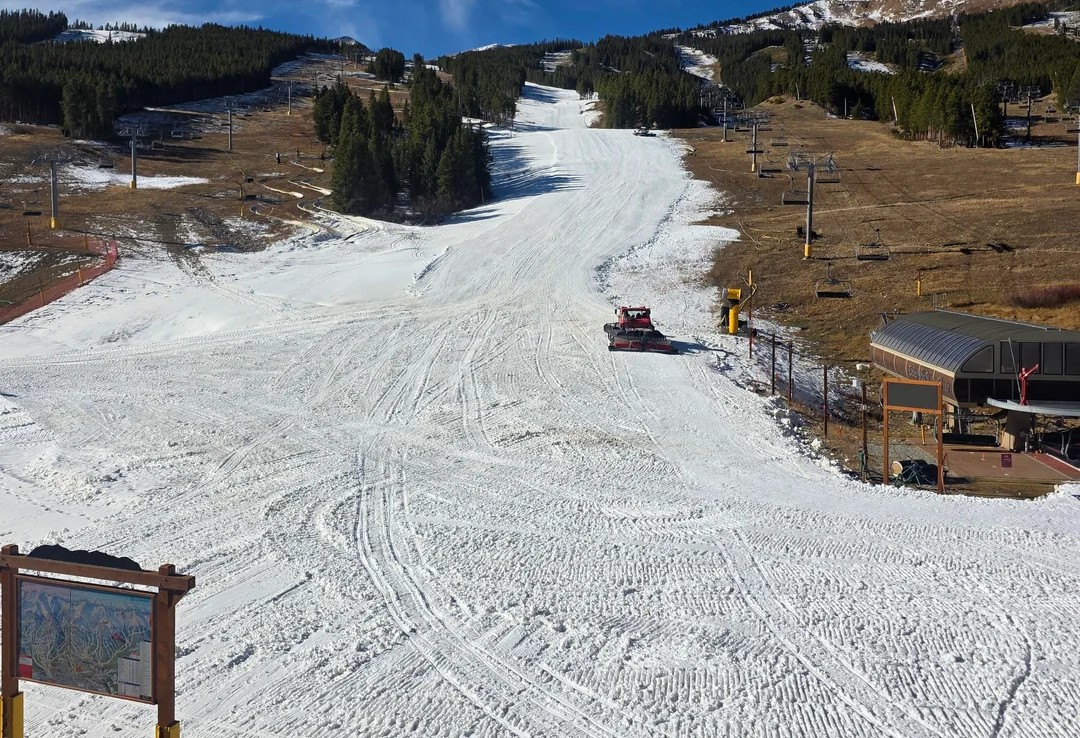
It’s January, and most ski resorts around me only have around 50% of terrain open. Where is all of the snow, and what does this mean for summer water supply?
This year’s snow trends have given a whole new meaning to Dry January. This winter, we’ve seen above average temperatures and below average precipitation. And the long-term forecast doesn’t bring much relief. The most recent seasonal weather outlook published by the National Oceanographic and Atmospheric Association shows that we can expect warmer than usual temperatures to persist.
While these trends are on par with a La Niña year, this winter is among the very worst on record. Earlier this month, the Summit Daily reported that Summit County entered 2026 with the lowest snowpack on record since 1981. A starving snowpack is certainly disappointing news for winter sports enthusiasts, but the implications go far beyond recreational activities.
According to Colorado state climatologist Russ Schumacher, “The snowpack in Colorado’s mountains is hugely important because it’s the water supply for people not just here in Colorado, but in all directions.”
From Snowpack to River Flow
Summit County is considered a “headwaters community” for the Colorado River. That’s because streams and rivers in Summit County are an important source of water for the Upper Colorado River. The snow that falls in winter becomes river flow when it melts in the spring – from small ephemeral streams that feed the Swan, the Snake, and the Upper Blue Rivers, to the Lower Blue, and eventually the Colorado. The Colorado River then flows on to provide water to more than 35 million people across seven states: Colorado, Utah, Wyoming, and New Mexico (the Upper Basin) and Arizona, Nevada, and California (the Lower Basin).
So, what happens when the headwaters, the water source, have drastically diminished snow accumulation compared to previous years? We begin to answer this question by taking a look at Lake Mead, the famous reservoir dividing the Upper and Lower Basins.
Downstream Impacts
Formed in the early 1930s by the Hoover Dam on the Colorado River, Lake Mead was widely considered an engineering wonder. Now in the throes of an unrelenting decades-long drought across the Southwest, the stark “bathtub ring” photos of Lake Mead’s depleted reservoir walls expose our overconsumption of water and the ongoing impacts of climate change.
The water level in Lake Mead is measured in feet above sea level. As of January 1, Lake Mead’s water elevation was 1,062 feet – that’s low enough to already trigger mandatory water cutbacks in the Lower Basin states.
Which states will the water shortage declaration impact most? Arizona agriculture will be the hardest hit, with farmers left to rely on groundwater sources or leave fields unplanted. If water decline continues, California will be the next affected. While this might feel far from home, remember that most winter staples like lettuce are grown using this water.
A Closer Look at Home
Compared to the last 30 years, Summit County is sitting at 58% of snow-water equivalent – the total amount of water in snow. A large contributor to this lack of snowpack has to do with abnormally warm temperatures, with 5-10 degrees above average recorded in November and 9-12 degrees above average in December. Some resorts even saw rain on Christmas.
Colorado’s balmy, arid climate this year has exacerbated already existing drought conditions, creating parched soils that act like a sponge, soaking up snowmelt before it can reach rivers and streams as runoff in the spring.
There is still a lot of snow accumulation season left, and it will be a few months before it becomes clear whether the slow start to the winter will impact critical water supply. If trends continue, stretches of river that are normally used for summer recreational activities like fishing and whitewater rafting may be temporarily closed until flows return to safe levels. River rats may even have to make do with a shortened river season.
What can we do? While state officials, agencies, and local water coalitions work to develop new and improved agreements governing how we use the waters of the Colorado River, the best thing we can do as consumers is to actively reduce our water use. The average person in the United States consumes 80– 100 gallons of water per day. Consider how you could use less – much less.
Ask Eartha Steward is written by the staff at the High Country Conservation Center, a nonprofit dedicated to waste reduction and resource conservation. Submit questions to Eartha at
info@highcountryconservation.org
