
- High Country Conservation
- January 29, 2026
- Ask Eartha
Dear Eartha, I saw so much food wasted during the holidays. My New Year’s resolution is to throw away less food and support restaurants doing the same. Any tips for making this a reality?
You’re right—an enormous about of food is wasted during the holiday season. While we enjoy filling ourselves to the brim in good company, we don’t always consider the impact of this indulgence. The US sees a 25% rise in household waste sent to landfills between Thanksgiving and New Year’s, and much of that is food waste. In fact, it’s estimated that 320 million pounds of food is wasted in the US on Thanksgiving alone. While we can’t change the past, we can resolve to do better throughout the new year.
The problems with food waste
When tossing food in the trash, it’s not just the food itself that is wasted, but the water and energy used to grow it and transport it to us. For example, it takes 25 gallons of water just to grow one apple! Hopefully it’s a local Colorado apple you’re enjoying, but it’s also possible that your delicious apple traveled to your mouth from Washington or New York. The impact of our food choices is not always, well, apples to apples.
It gets worse—when we put that food in the trash and send it to the landfill, this organic material is buried and compacted. When food breaks down without oxygen, it releases methane, a greenhouse gas that traps more heat than carbon dioxide. It’s estimated that 58% of the methane released into the atmosphere from landfills is from food waste. Food waste in the landfill has a negative environmental impact, but it is also just taking up unnecessary space. Locally, food and other organic materials make up around 32% of our waste.
Tips for reducing waste
So how can we keep food out of our landfill? First off, only buy what you need. Next, make sure items are properly stored. Different items have different storage guidelines, and tools like SaveTheFood.com can help take the mystery out of it. When you have leftovers, get creative with how to revamp them into a new dish. A favorite in my household is making potato pancakes from mashed potatoes. And don’t forget about your freezer. Freezing items can dramatically extend their life, while giving you a quick easy meal, or a taste of summer in the winter.
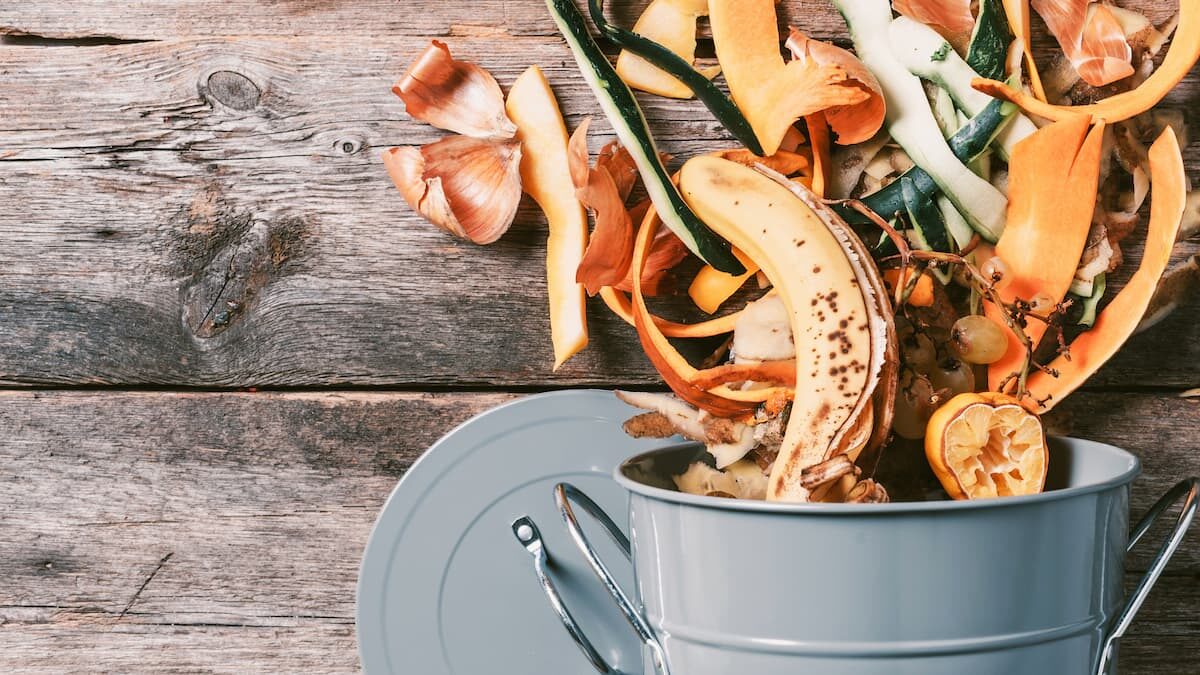
But unless you’re eating your banana peels, you’ll always have some scraps left. That’s where composting comes in. By collecting those scraps and composting them, we can create an amazing, nutrient rich soil amendment while also extending the life of our landfill and reducing methane emissions at the same time. It’s a win-win-win.
Food scrap program
But how can we compost responsibility without tempting our local wildlife to a backyard compost heap? In Summit County, composting household food scraps is easy, convenient, and free! A partnership between the Summit County Resource Allocation Park (SCRAP) and High Country Conservation Center (HC3) allows residents to sign up for the Food Scrap Program at HighCountryConservation.org. You can swing by the HC3 office in Frisco to pick up a free bin for collecting your food scraps, and then dump them at any of the eight drop-off sites around the county. You’ll have the satisfaction of watching your trash shrink and no longer stink!
Restaurants can get in on the action, too!
Now is a great time to encourage your favorite restaurant to start collecting their food scraps. By nature of the business, restaurants can produce quite a bit of food waste, making them an important piece of the puzzle when trying to limit the amount of food waste going in our landfill. On Wednesday, January 28 from 11am-1pm, industry staff are invited to a workshop for compost-curious restaurants to learn how to go about adding food scrap collection and pick-up to their operations. Participants can hear about the free resources that HC3 can offer, like bins for collecting food scraps and bilingual training for staff. They can also take a peek at the successful set-up at Bistro North. RSVP is required at HighCountryConservation.org. Lunch is included—and don’t worry—any extras will be transformed into compost.
Ask Eartha Steward is written by the staff at the High Country Conservation Center, a nonprofit dedicated to waste reduction and resource conservation. Submit questions to Eartha at info@highcountryconservation.org.
